Tucked away in Megalong Valley, Mermaids Cave is one of those special Blue Mountains spots that feels like a secret discovery. This natural rock shelter with its cascading waterfall creates a magical setting that gets everyone excited. Best of all? You can be there and back in under an hour, making it perfect when you want a nature experience without taking up your whole day.
Overview of Mermaids Cave Walk
Location and Features
Mermaids Cave sits in Megalong Valley, about 15 minutes from Katoomba. Despite the name, it’s not actually a cave. It’s a huge sandstone overhang that water has carved out over millions of years. When there’s been good rain, a waterfall cascades over the edge, and you can walk right behind it.
The area is part of the Greater Blue Mountains World Heritage Area. It’s tucked into a cool, damp gully that stays green all year. Ferns, mosses, and other plants that love moisture thrive here, giving the place a prehistoric feel.
Perfect for All Adventurers
Mermaids Cave is so popular because it’s easy to reach. You don’t need hiking experience or a full day free. Families love it because kids can manage the walk, and it feels like a real adventure.
This is different from standing at a lookout far away from everything. Here, you’re right in the action. You can feel the waterfall spray, touch the ancient rock, and walk behind the water. Kids love this hands-on experience, and adults do too.
The Walking Experience
The walk takes you through different scenery in a short space. You start in typical Blue Mountains forest, then go down into a cool gully where the temperature drops. You’ll hear the water before you see it, building up the excitement.
Tree ferns create shade overhead as you walk down. If you’re quiet in the early morning, you might spot a wallaby. The track winds through thick plants, and then suddenly you see it. The huge rock shelter rises up with water tumbling down.
Trail Details and Accessibility
Track Information
The walk is about 800 metres return. Most people take 20 to 40 minutes, depending on how often you stop to look around. It’s rated easy to moderate. You’ll go down about 50 metres, then climb back up.
Going down is the easy part. Coming back up those 140 steps reminds you it’s actual exercise. Take your time. There’s no rush, and the views looking back are worth stopping for.
Navigating the Stairs Safely
The stairs are well-built with timber, metal, and handrails. But they get slippery, especially after rain or near the cave, where the spray keeps everything wet.
Watch your step going down and keep an eye on the kids. Some parts run close to the cliff edge. Young children might need help climbing back up. You can’t bring prams because of the stairs.
Good shoes are essential. Don’t wear smooth sneakers or thongs. You need a proper grip, especially in winter when algae makes the steps extra slippery.
Getting There and Parking
Drive south from Katoomba on Megalong Road. It’s a beautiful 15-minute drive down into the valley. The car park is clearly marked on your left.
The car park only fits 8 to 10 cars. It fills up quickly on weekends and school holidays. Try to arrive early, or you might need to park safely along the road. The walk starts right from the car park.
What to See
The Main Attraction
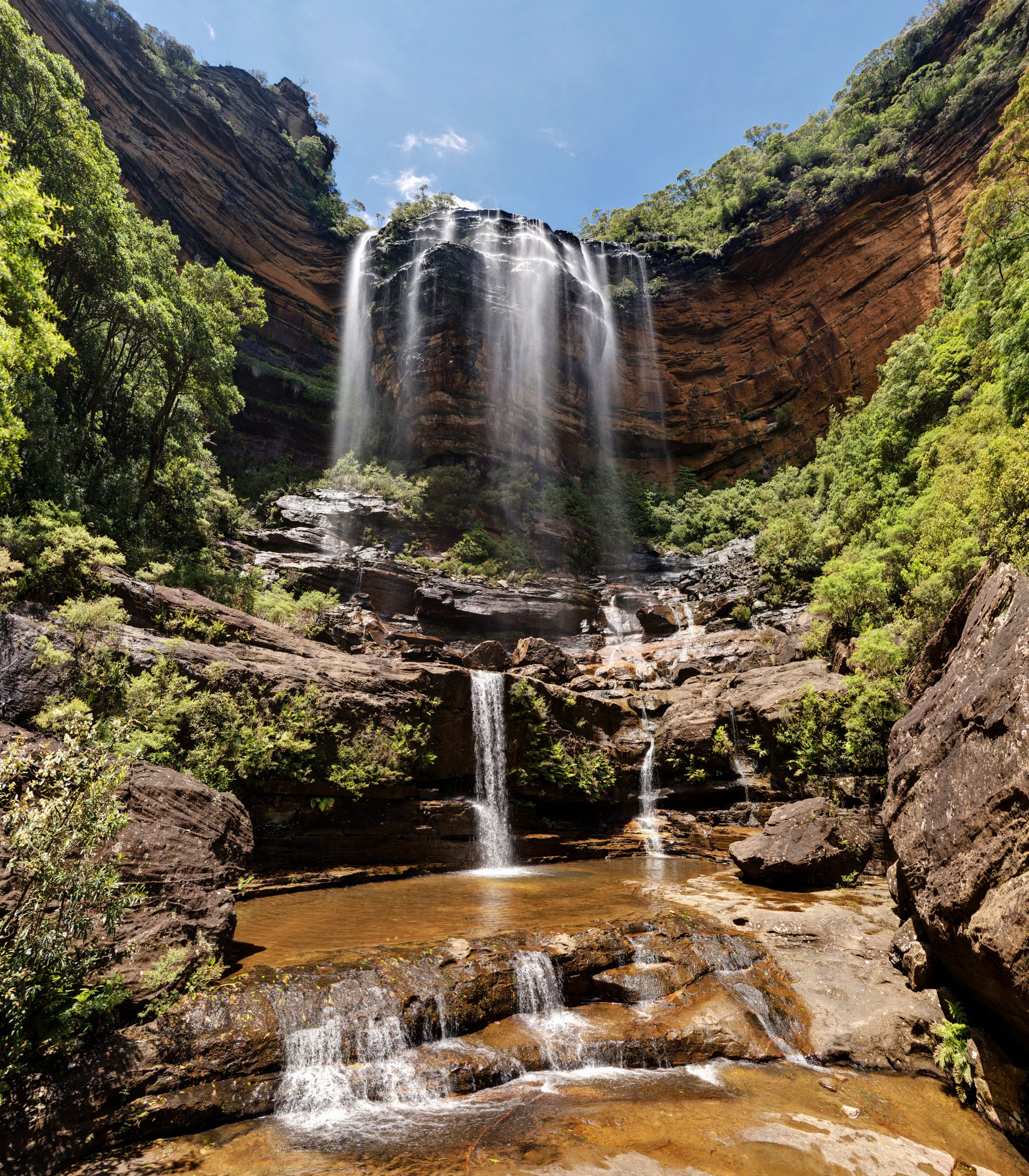
The rock overhang is huge, about 15 metres high and 20 metres wide. After rain, the waterfall creates a beautiful curtain of water you can walk behind. Even in drier times, constant seepage keeps everything damp and atmospheric.
Standing behind the water is really special. The rock face is covered in moss and tiny ferns. Water trickles down the sandstone, and the space makes the waterfall sound amazing. You’ll want to just stand there and take it all in.
Natural Features and Environment
The rock layers tell an incredible story. Those stripes in the sandstone are ancient sand from millions of years ago. The smooth curves come from water slowly wearing away the rock.
The gully feels like a different world. The forest above is dry eucalyptus, but down here everything is lush and green. Tree ferns filter the light. The ground is covered with coral ferns, native violets, and mosses. It’s cooler and damper, with an ancient atmosphere.
Photography Spots
This place is great for photos. Going down the stairs gives you high views of the cave and waterfall with plants all around. At the bottom, you can photograph the full height with the waterfall in the centre.
The best shot is from behind the waterfall looking out. You get cascading water framing the view of the gully. Come around midday when the sun lights up the cave properly. Early morning can be quite dark inside.
Planning Your Visit
Timing Your Trip
You can visit any time, but winter and spring have the best waterfall. If it’s rained in the last few days, you’re in for a treat. The waterfall is powerful, and everything looks incredibly green.
Summer is good too, though the waterfall might be just a trickle or completely dry after no rain. Autumn has beautiful colours. Weekdays are usually quieter than weekends.
Packing Essentials
Keep it simple but bring the basics:
- Proper walking shoes
- At least 500ml of water per person
- Phone or camera
- Light jacket (the gully is much cooler)
- Hat and sunscreen
If you want to get close to the waterfall, bring a small towel. You’ll get wet from the spray. A waterproof phone case helps too. In summer, bring insect repellent. In winter, bring extra warm layers because the gully gets cold.
Exploring the Area Further
Mermaids Cave has no toilets or shops. The nearest facilities are in Katoomba or at Megalong Valley Tea Rooms, about 10 minutes away.
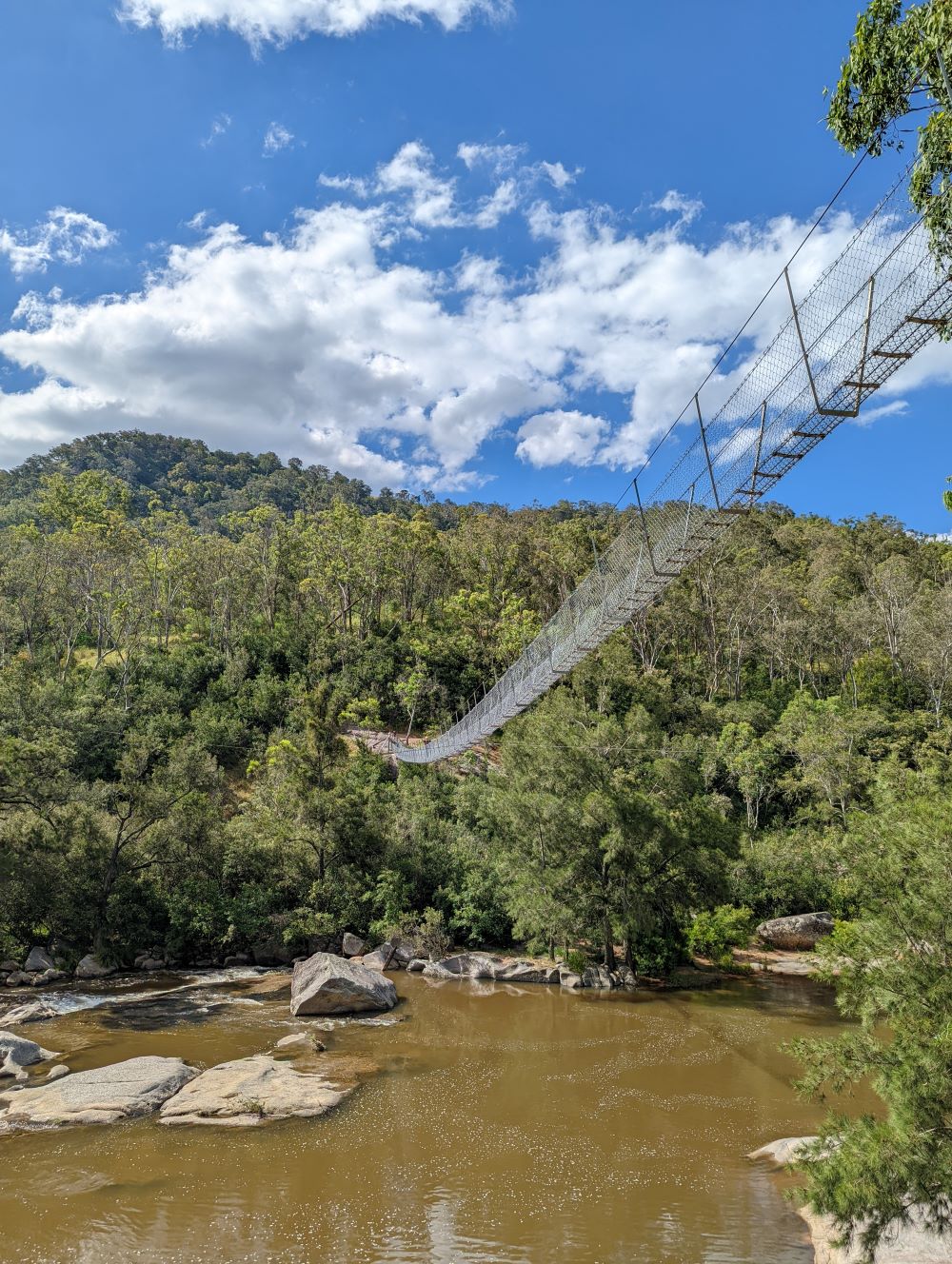
Want to do more walking? Bowtells Swing Bridge is a popular three-hour walk from Cox’s River Campground. The Six Foot Track passes through the valley. For something shorter, try the Megalong Valley Heritage Trail.
The valley is beautiful with scenic drives, horse riding, and cafes with great views. Many people spend the whole day here, visiting several spots. It’s a lovely part of the Blue Mountains worth exploring properly.