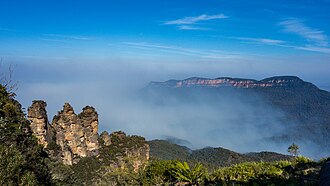
It was my first visit to Echo Point. The mist was still lifting from the valley, and there they stood, the Three Sisters, rising with quiet strength above the forested gorge. That moment stayed with me. Like many others, I came for the view, but I left with something more: a sense of story, deep time, and connection.
What is the Three Sisters rock formation and where is it located?
The Three Sisters are three towering sandstone peaks located in the Blue Mountains of New South Wales, Australia. Their names are Meehni, Wimlah, and Gunnedoo, and they reach up to 922, 918, and 906 metres above sea level. You can find them at Echo Point in Katoomba, one of the most visited lookouts in the Blue Mountains.
These dramatic peaks overlook the Jamison Valley and are part of the Greater Blue Mountains World Heritage Area. Their golden hues shift with the light. A sunrise brings a soft glow, while sunset paints them in deeper reds and oranges. They’re not just rock formations, they’re symbols of a land shaped by time, story, and spirit. (Blue Mountains Tour Sydney)
How were the Three Sisters formed?
Geologically, the Three Sisters were formed over 200 million years ago during the Triassic period. What we see today was once a river plain covered with layers of sandstone and shale. Over millions of years, natural forces like wind, water erosion, and minor faulting slowly carved the cliff lines.
Unlike volcanic formations, the Three Sisters are sedimentary, created by compacted layers of sand and silt, then shaped by erosion. Their steep faces and individual separation came from the constant push and pull of environmental conditions: freezing, thawing, rainfall, and wind.
How do they compare to other iconic rock formations in Australia?
| Feature | The Three Sisters | Uluru | Kata Tjuta | The Pinnacles |
| Type of Formation | Sandstone spires | Sandstone monolith | Rock domes | Limestone pillars |
| Geological Age | ~200 million years | ~550 million years | ~550 million years | ~30,000 years |
| Height | 922m (Meehni) | 348m | up to 546m | up to 3.5m |
| Location | Blue Mountains, NSW | Northern Territory | NT, Australia | Western Australia |
| Cultural Significance | Aboriginal Dreamtime | Sacred to Anangu | Sacred to Anangu | Spiritual meanings (Noongar people) |
| Visitor Experience | Lookouts, hiking, stories | Base walks, sunrise/sunset | Valley of the Winds walk | Walk trails through formations |
| Unique Features | Three distinct spires | Single rock mass | 36 domes | Thousands of limestone spires |
| Tourism Volume | High | Very high | Moderate | Moderate |
Compared to Uluru and Kata Tjuta, the Three Sisters are more accessible for day trips and offer panoramic valley views, making them ideal for shorter visits.
The story of the Three Sisters Blue Mountains
According to Gundungurra Dreaming, Meehni, Wimlah, and Gunnedoo were three sisters from the Jamison Valley who fell in love with brothers from a neighbouring nation. Marriage between their tribes was forbidden. To protect them during conflict, an elder turned the sisters into stone. But he was killed before he could reverse the spell, and the sisters remain in stone to this day.
This Dreamtime story, passed down through generations, speaks of love, protection, and the permanence of nature. It’s more than a myth, it’s a living thread in the cultural fabric of the region. Visitors can learn more about the story and its meaning at the Blue Mountains Visitor Centre.
Where can visitors best view and experience the Three Sisters?
Echo Point is the most popular place to see the Three Sisters. From here, the view opens across the Jamison Valley, with the rock spires front and centre. The lookout has multiple viewing platforms and is especially beautiful at sunrise or after a rainstorm when the clouds settle low in the valley.
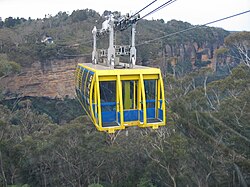
For different perspectives, Scenic World offers rides that float above and below the cliffs. The Skyway glides across the valley floor, while the Cableway descends through dense forest, revealing angles of the Three Sisters that most visitors never see.
Spring and autumn are the best seasons to visit. The air is crisp, the trails are dry, and wildflowers bloom across the escarpments. In winter, you might even catch frost clinging to the cliff edges.
What hiking trails and activities surround the Three Sisters?
From Echo Point, you can take the Giant Stairway trail, which descends beside the first sister. With over 800 steep steps, it leads to the valley floor and connects with Federal Pass, a long and peaceful walk through the forested base of the cliffs.
For easier walks, try the Three Sisters Walk, which is short and paved, perfect for families. More seasoned hikers might enjoy longer trails like Prince Henry Cliff Walk, which connects Echo Point with Leura Cascades and Gordon Falls.
These trails wind through tall gum forests, past waterfalls, and across high ridgelines. Many connect with other scenic spots, including Katoomba Falls and the Jamison Valley floor, offering a full day of exploration.
What facilities and amenities support visitors at the Three Sisters and Blue Mountains?
Visitors will find restrooms, picnic areas, and a visitor information centre at Echo Point. The lookout is accessible for people with limited mobility and is equipped with interpretive signage explaining both geological and cultural aspects of the site.
Nearby, Scenic World offers attractions such as the Scenic Railway, Skyway, and Cableway. Ticket prices vary by package, but they often include unlimited rides and access to rainforest boardwalks.
The town of Katoomba is just a few minutes away. Here you’ll find a wide range of accommodation, from boutique hotels to cosy guesthouses. Cafes, galleries, and markets offer a taste of Blue Mountains life, with local crafts and produce to explore.
Travel from Sydney is simple. Trains run regularly to Katoomba Station, and buses or a short taxi ride connect you to Echo Point. Driving takes around two hours from the city, with parking available at the lookout and in nearby streets.
Summary
The Three Sisters are more than a landmark. They are a meeting point between land, time, and story. Their presence holds space for both the ancient and the immediate, rock shaped over millennia, yet still resonating with human emotion.
When you stand at Echo Point or descend the Giant Stairway, you’re not just seeing the landscape. You’re stepping into it, becoming part of a story that stretches back thousands of years.
Visit with curiosity. Listen to the wind between the cliffs. Let the silence and the scale move you. And when you return home, carry with you not just the photo, but the memory of a deeper connection with the place.